
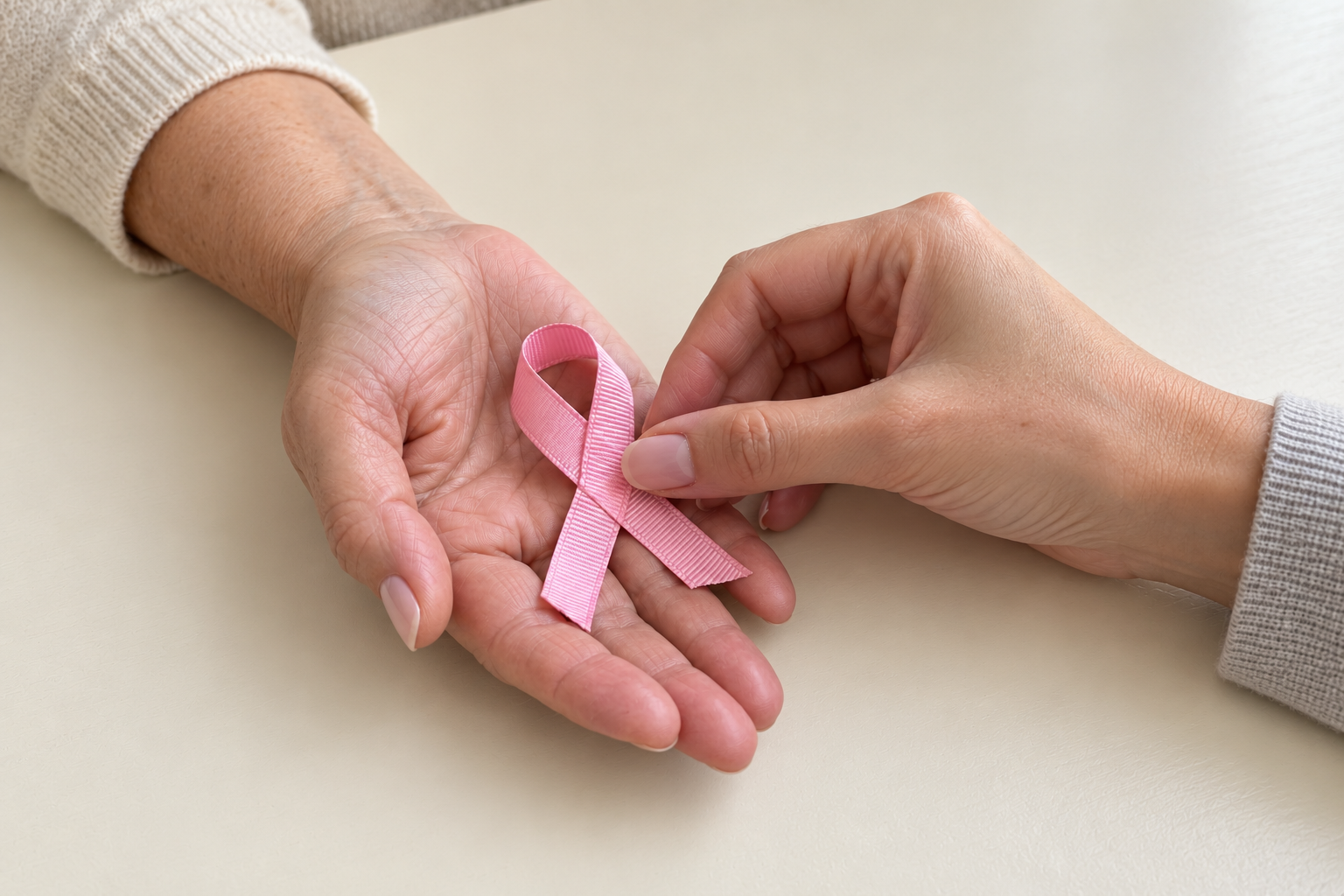
Breast cancer skin changes deserve attention, whether they appear before a diagnosis or develop during treatment. Understanding what to watch for—and when to ask for help—can support your health, comfort, and confidence.
October is Breast Cancer Awareness Month. At The DERM Center in Chattanooga, we’re highlighting the connection between breast health and skin health, along with practical ways to care for sensitive skin.
Some changes need prompt medical evaluation. Others may be treatment side effects that your healthcare team can help manage. These seven tips explain the difference and offer a starting point for conversations with your providers.
1. Recognize Breast Cancer Skin Changes That Need Evaluation
Breast cancer can sometimes cause visible changes to the breast’s skin. Possible warning signs include:
- New redness or a change in skin color.
- Swelling or a noticeable change in breast size.
- Dimpling, thickening, or an orange-peel texture.
- A nipple that newly turns inward.
- An unusual change in the breast’s appearance or feel.
These symptoms do not necessarily mean cancer. Infections and other conditions can cause similar changes. However, you cannot reliably determine the cause by appearance alone.
Inflammatory breast cancer, an uncommon but aggressive form of breast cancer, may cause skin changes without a noticeable lump. Contact your healthcare provider promptly about new or rapidly developing symptoms. Do not wait for your next screening mammogram.
The National Cancer Institute’s information about inflammatory breast cancer explains these warning signs in greater detail.
2. Discuss Breast Cancer Skin Changes Before Treatment
Breast cancer skin changes can also develop because of treatment. Chemotherapy may cause dryness, itching, rashes, changes in pigmentation, or increased sun sensitivity. Radiation can cause irritation, peeling, and color changes in the treated area.
Before treatment begins, ask your oncology team which effects are possible with your specific plan. Knowing what to expect can make it easier to recognize a new concern.
Useful questions include:
- Which skin changes should I report immediately?
- Which cleanser and moisturizer should I use?
- Are there products I should stop using?
- Who should I contact between appointments?
The National Cancer Institute’s guide to skin and nail changes during cancer treatment is another helpful resource.
3. Keep Your Cleansing Routine Gentle
If breast cancer skin changes make your skin sensitive, discuss a simple cleansing routine with your care team. A mild, fragrance-free cleanser and lukewarm water may be more comfortable than harsh soap or hot showers.
Treat the skin gently. Avoid scrubbing, and pat dry with a soft towel instead of rubbing.
Radiation-treated skin may need special instructions. Follow your radiation team’s guidance about washing the area and protecting treatment markings.
Your routine does not need to be complicated. Bring a list or photos of your current products to an appointment so your team can help you decide what to keep.
4. Moisturize With Your Care Team’s Guidance
Dryness and tightness can make breast cancer skin changes uncomfortable. Ask your healthcare team to recommend a moisturizer and explain when and where to apply it.
For radiation-treated skin, product choice and timing should follow your treatment center’s instructions. Do not apply ordinary moisturizers to open or broken areas unless your team specifically directs you to do so.
If a product stings or makes irritation worse, stop using it and ask for advice. Adding more products is not always the best solution.
Memorial Sloan Kettering’s radiation skin care guide offers additional information to discuss with your radiation team.
5. Protect Sensitive Skin From Sun and Friction
Some treatments increase sun sensitivity. When managing breast cancer skin changes, ask your team how to protect exposed skin and which sunscreen is appropriate for your treatment plan.
Shade, protective clothing, and a wide-brimmed hat can help reduce sun exposure. Radiation-treated skin may also benefit from soft, loose clothing that limits rubbing.
Tell your team if clothing or a bra irritates the treatment area. Small adjustments may help make everyday activities more comfortable.
Follow your providers’ instructions rather than trying a new product simply because its packaging describes it as gentle or natural.
6. Ask Before Adding Products or Skin Treatments
When breast cancer skin changes appear, it can be tempting to try several remedies at once. Instead, check with your oncology team before introducing new skincare products, medicated creams, or professional treatments.
Ask specifically about exfoliants, retinoids, chemical peels, and other products or procedures that may irritate sensitive skin.
Keep a short record of when symptoms began, what you applied, and whether anything made them better or worse. Share that information with your providers.
Do not stop or change cancer treatment on your own because of a skin reaction. Contact your oncology team for instructions.
7. Seek Support for Breast Cancer Skin Changes Early
You do not have to wait until breast cancer skin changes become severe to ask for help. Let your oncology team know about new symptoms so they can decide what evaluation or treatment is needed.
Contact your treatment team promptly about blistering, open areas, drainage, worsening pain, or increasing redness and swelling. Report fever according to the urgent instructions provided by your oncology team.
A dermatology provider may also help evaluate persistent rashes, dryness, itching, and other skin concerns while coordinating with your cancer care team.
Learn more about rash evaluation at The DERM Center or explore our dermatology services in Chattanooga.
Caring for Your Skin This October and Beyond
Breast Cancer Awareness Month is an opportunity to encourage early evaluation, support loved ones, and make room for conversations about comfort during treatment.
Understanding breast cancer skin changes is one part of that conversation. Your questions matter, and skin concerns deserve attention alongside the other parts of your care.
At The DERM Center, we believe compassionate care includes listening to how skin symptoms affect your daily life. Whether you need guidance about a persistent rash or help understanding your next step, reach out.
Together, let’s encourage awareness, timely evaluation, and support for everyone affected by breast cancer.
This article provides general education and does not replace individualized medical advice. New breast changes require prompt evaluation by a healthcare provider. During cancer treatment, follow your oncology team’s instructions for skin care and reporting symptoms.


