
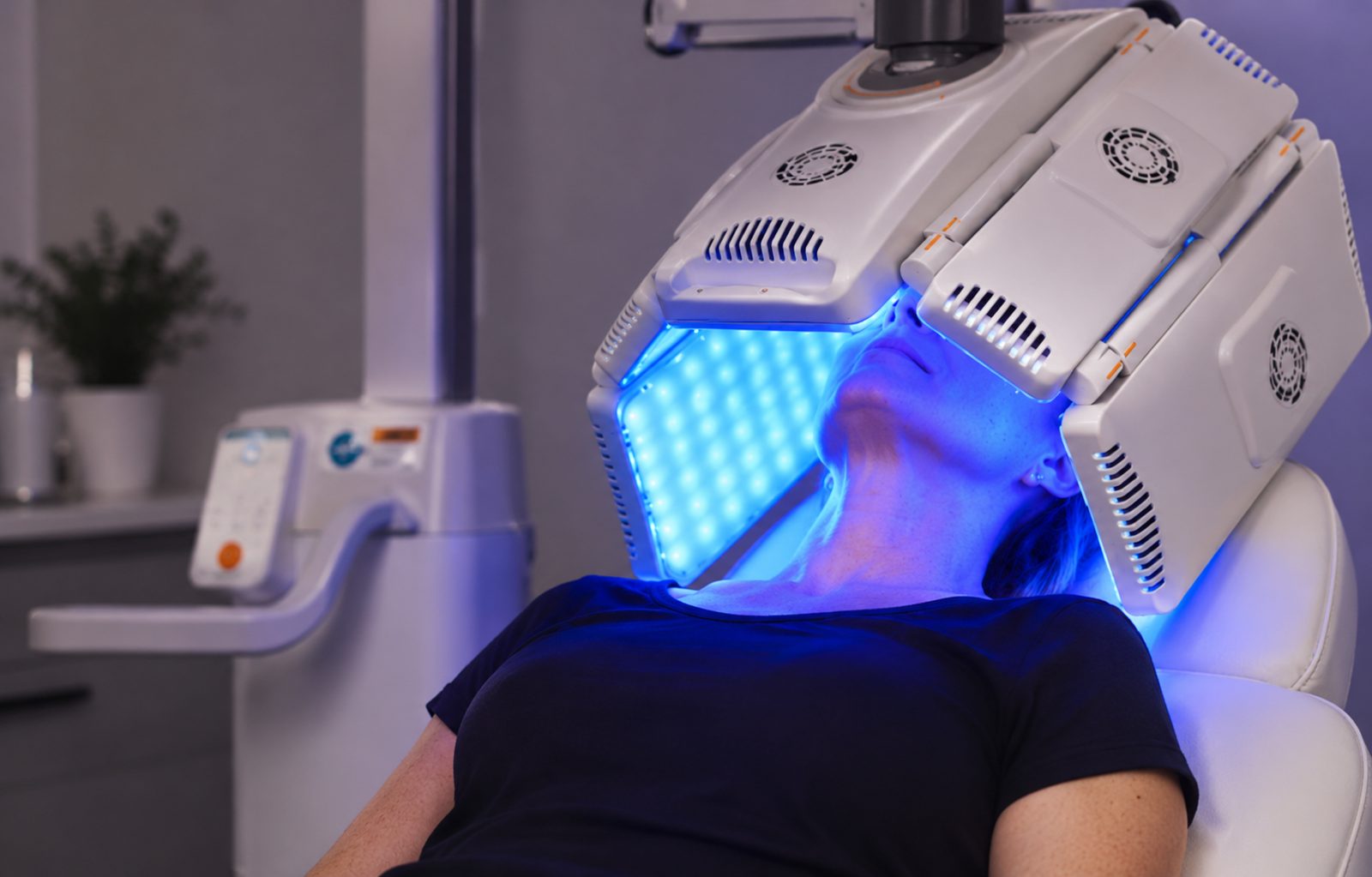
What Is Photodynamic Therapy?
Photodynamic therapy uses a light-sensitizing medication and a specialized light source to produce a targeted reaction within treated skin.
During the procedure, a prescription photosensitizing medication is applied to the affected area.
After an appropriate absorption period, the area is exposed to a compatible medical light source.
This activates the medication and creates a reaction that can damage targeted abnormal cells.
As the treated area heals, PDT can help clear certain precancerous lesions.
Unlike routine cosmetic LED light therapy, PDT is a medical procedure that requires a prescription medication, specific treatment protocols, and appropriate post-treatment precautions.
What Does PDT Treat?
Actinic Keratoses: Precancerous Skin Lesions
Actinic keratoses, commonly called AKs, are rough, scaly, or discolored areas that develop as a result of cumulative sun exposure.
They frequently appear on sun-exposed areas, including the face and scalp.
Actinic keratoses are considered precancerous because some can develop into squamous cell carcinoma, a type of skin cancer.
PDT is an established treatment option for certain actinic keratoses and can be particularly useful when multiple lesions are present within an affected area.
PDT can help address:
- Certain precancerous actinic keratoses
- Multiple lesions within an area of sun-damaged skin
- Selected areas of visible and subclinical sun damage
- Patients who may benefit from a field-directed, nonsurgical treatment approach
Your provider will evaluate the affected skin and determine whether PDT or another treatment is most appropriate.
What Are the Benefits of PDT?
Photodynamic therapy offers several advantages for appropriately selected patients.
Potential benefits include:
- Nonsurgical Treatment: PDT can treat certain precancerous lesions without traditional surgical incisions.
- Field-Directed Therapy: Treatment can target multiple lesions and an affected area of sun-damaged skin.
- Targeted Medical Treatment: Light activation works together with the prescription medication to damage susceptible abnormal cells.
- Treatment Flexibility: PDT provides an alternative to certain lesion-directed procedures or prescription topical therapies.
- Professional Medical Oversight: Treatment is selected and monitored according to individual skin concerns and medical needs.
Although PDT can be effective for certain actinic keratoses, response varies and additional treatment may be necessary.
What to Expect During Your PDT Appointment
Step 1: Skin Evaluation & Preparation
Your provider evaluates the treatment area and prepares the skin according to the selected protocol.
This may include cleansing and additional preparation of certain lesions.
Step 2: Application of Medication
A specialized light-sensitizing medication is applied to the designated treatment area.
The medication is designed to make targeted abnormal cells more responsive to light activation.
Step 3: Medication Absorption
The medication remains on the skin for a prescribed period before light activation.
The required absorption period depends on the medication and approved treatment protocol.
Step 4: Light Activation
The affected area is exposed to a compatible medical light source.
Light activation produces a reaction that can damage targeted abnormal cells.
Patients may experience warmth, tingling, stinging, burning, or discomfort during illumination.
Your provider will monitor your response and explain what to expect during treatment.
Step 5: Recovery & Follow-Up
After treatment, the skin begins a healing response.
Your provider will explain post-treatment precautions, provide recovery instructions, and recommend appropriate follow-up evaluation.
What Is the Downtime After PDT?
PDT can produce a noticeable inflammatory response in treated skin.
Temporary reactions can include:
- Redness and tenderness
- Swelling
- Burning or stinging
- Dryness and tightness
- Peeling or flaking
- Crusting or scaling
The severity and duration of these reactions depend on the treatment area, medication, individual skin response, and other factors.
Some patients experience a more intensive or prolonged recovery than others.
Your provider will discuss the anticipated recovery process and necessary precautions before treatment.
Important: Following PDT, treated skin may remain unusually sensitive to light. Patients must follow medication-specific light-avoidance instructions, including avoiding direct sunlight and bright indoor light for the prescribed period.
For protocols requiring approximately 48 hours of light avoidance, these precautions are essential even if the skin appears comfortable.
How Many PDT Treatments Will I Need?
Treatment recommendations depend on the number and location of lesions, the extent of sun damage, and individual response.
Some patients may be treated with a single treatment cycle, while others require additional sessions, follow-up evaluation, or alternative treatment.
Complete lesion clearance cannot be guaranteed.
Your provider will assess the response to treatment and discuss any additional care needed.
Preparing for Your PDT Appointment
Before your procedure:
- Inform your provider about current medications, supplements, and medical conditions.
- Disclose any history of unusual light sensitivity or photosensitive disorders.
- Discuss recent skin procedures, sunburns, or active irritation.
- Follow instructions regarding skincare products that may need to be temporarily discontinued.
- Plan for the required recovery and light-avoidance precautions.
- Arrange transportation and scheduling as appropriate for your treatment instructions.
Additional preparation may be necessary depending on the medication and protocol used.
Caring for Your Skin After PDT
Proper aftercare is an important part of treatment.
During the Initial Photosensitive Period
- Avoid direct sunlight and other bright light sources as instructed.
- Remain indoors when possible.
- Protect treated skin with appropriate clothing or physical barriers when necessary.
- Avoid tanning beds and unnecessary light exposure.
- Use gentle skincare products recommended by your provider.
- Avoid excessive heat, aggressive exfoliation, and picking at treated areas.
Sunscreen alone is not sufficient protection during the medication-specific photosensitive period.
As Your Skin Recovers
- Gently cleanse treated areas as directed.
- Maintain hydration with recommended skincare products.
- Avoid irritating treatments and active skincare ingredients until cleared to resume.
- Practice consistent sun protection.
- Attend recommended follow-up appointments.
Contact our office if you experience worsening pain, excessive swelling, signs of infection, or other concerning reactions.
Is Photodynamic Therapy Covered by Insurance?
Photodynamic therapy may be a billable procedure with some health insurance plans when it is performed for a medical diagnosis, such as actinic keratoses.
Our office can confirm whether PDT is a billable benefit under your plan and will let you know if it is not.
Coverage details, deductibles, and your out-of-pocket responsibility vary by plan, so we recommend checking with your insurance company before treatment.
Personalized Treatment Planning
Every patient’s sun damage and medical needs are different.
At The DERM Center, PDT recommendations are based on your individual skin findings, medical history, and treatment goals.
Your provider will evaluate the affected areas, explain available treatment options, and discuss the recommended approach.
Treatment requirements, anticipated costs, and follow-up recommendations will be reviewed as part of your personalized care plan.
Take a Proactive Approach to Sun-Damaged Skin
If you’ve noticed rough, scaly patches or have a history of significant sun exposure, a professional dermatologic evaluation can help identify areas requiring medical attention.
Schedule Your Dermatology Appointment
Individual Treatment & Results
Photodynamic therapy is a medical treatment intended for specific skin conditions and is not appropriate for every patient or lesion. Treatment response, lesion clearance, required sessions, and recovery experiences vary. Complete clearance and prevention of future precancerous lesions or skin cancers cannot be guaranteed. Your provider will discuss treatment indications, potential benefits, risks, alternative options, and follow-up recommendations based on your individual medical needs.

The DERM Center stands as Chattanooga's premier medical dermatology center, offering specialized care for a diverse range of skin conditions. With a commitment to precision, innovation, and patient-centric care, our dermatologists provide tailored solutions that address the unique needs and concerns of each individual. Whether managing chronic conditions like psoriasis or addressing acute concerns such as poison ivy rashes, our clinic is dedicated to elevating skin health and enhancing overall well-being. If you or a loved one is seeking expert medical dermatology care, we invite you to experience the comprehensive and personalized approach at The DERM Center, where your skin health takes center stage.


Chattanooga TN's Five Star Dermatology Practice
"Emily Brewer and her staff are the best!! Emily is the only dermatologist who has treated my condition accurately and it cleared within a few days! I don't ever want to see any other dermatologist!!"
-CM
"I have been a patient of Emily Brewer for many years. I had surgery for melanoma in 2009 so she is very thorough and takes her time to make sure I'm taken care of. She treats me as a person not just another patient. The office staff is just as wonderful especially her nurse Mallory. Their new office is very nicely done. I recommend her to everyone I know and will go to her for as long as she is in practice!"
-LF
"Excellent care. Everyone in this office strives to be efficient, calm, and kind. Emily Brewer explains what each dermatological blip might mean —and what might give cause for concern. Very thorough. I'm relieved to find someone so knowledgeable and thoughtful."
-SJ
"This place is MORE THAN AMAZING! Emily Brewer, DCNP, was such a professional, kind, and knowledgeable Dermatologist. She did such an amazing job and with having pretty bad anxiety she made me feel so comfortable... Not to mention, her assistant and their receptionist were so kind and friendly as well. I immediately was seen right at my appointment time and did not have one bad experience! I recommend their center more than 100%! Thank you for everything."
-TE
"Emily is always willing to listen to whatever issue that I am having with my skin. I never feel rushed or hurried during my visits. Emily is always great about coming up with a treatment plan that is customized just for me. If something is not working or I have a problem, I have always been able to call her office and get a call back from the nurse or an appointment within a few days."
-EF
"I had an excellent experience at The DERM Center! The facility is very clean and all the staff are extremely kind and welcoming. This was my first time seeing Emily Brewer, and she did a fantastic job!! She explains everything in great detail and is very thorough. I especially loved that Emily treated me like a person and not just another patient. I highly recommend The DERM center!!"
-MS
"The entire staff was professional and exceedingly friendly. The medical staff is exceedingly professional, and knowledgeable. I look forward to future appointments."
-EM
CONTACT US TODAY
Listening to your needs
Providing the care you deserve
Building a trusting lifelong relationship
"*" indicates required fields


